Affiliate disclosure: This article may contain affiliate links. If you use our links, Only For U Deals may earn a commission at no extra cost to you.
Buying a used car can save money, but it can also come with hidden risks. A clean exterior, a friendly seller, or a good price does not always tell the full story.
Before you make an offer, it is smart to check the vehicle’s history, review the VIN, look for title issues, check for open recalls, and compare what the seller says with available records.
This guide walks through the main steps to check a used car’s history before you buy.
1. Start with the VIN
The VIN, or Vehicle Identification Number, is a unique code used to identify a specific vehicle. In most modern vehicles, it has 17 characters.
You can usually find the VIN in places like:
- the driver-side dashboard, visible through the windshield
- the driver-side door jamb
- the vehicle title
- the registration document
- insurance documents
Before checking any report, make sure the VIN on the car matches the VIN on the title, registration, listing, and seller documents. If something does not match, treat it as a major warning sign.
2. Run a vehicle history report
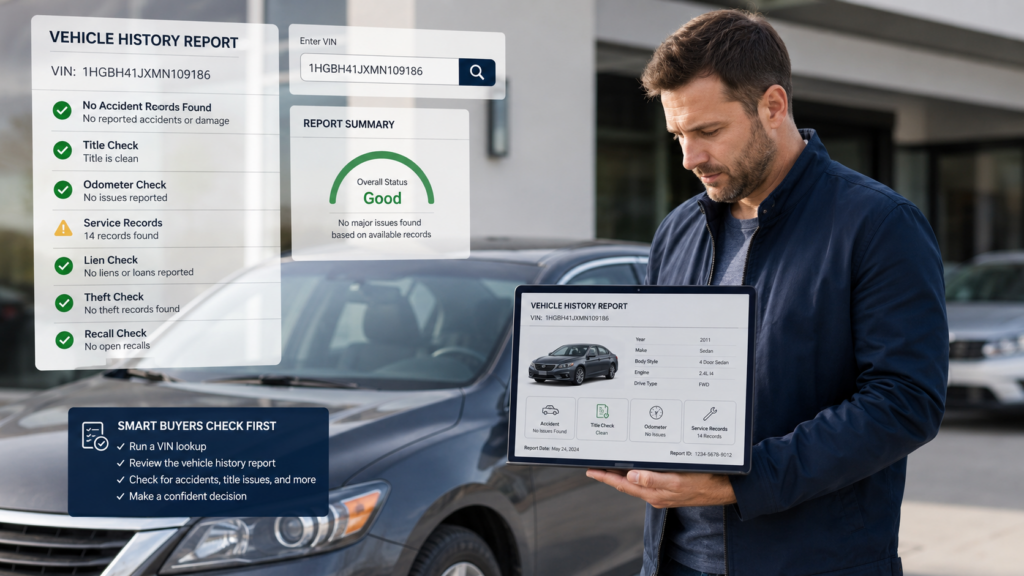
A vehicle history report can help you review available records connected to a used car. Depending on the provider and available data, it may include accident history, title records, odometer readings, salvage or flood history, theft records, lien information, and prior usage signals.
The Federal Trade Commission recommends using the VIN to get a vehicle history report when researching a used car. You can also visit official resources like the FTC used car buying guide and the National Motor Vehicle Title Information System to understand how vehicle history information can help consumers.
If you want a lower-cost option to start checking a vehicle’s history, you can also read our full VINCheckUp review or go directly to the vehicle lookup page below.
Check the vehicle history before you buy
Use the VIN to look for available accident records, title issues, odometer problems, liens, flood damage and other possible red flags.Check Vehicle History
3. Look for title problems
The title is one of the most important parts of a used car purchase. A title can reveal whether the vehicle has been branded because of serious events in its past.
Some common title-related red flags include:
- salvage title
- rebuilt title
- flood title
- junk title
- lemon buyback
- odometer-related title brands
A branded title does not always mean the car is impossible to buy, but it does mean you should slow down, ask more questions, and consider a professional inspection before making any decision.
4. Check accident history
Accident history can affect a car’s safety, resale value, reliability, and insurance situation. Some accidents are minor. Others may involve frame damage, airbag deployment, flood exposure, or total loss records.
When reviewing accident history, do not only ask whether the car was “in an accident.” Ask better questions, such as:
- Was the vehicle ever declared a total loss?
- Were airbags deployed?
- Was there structural or frame damage?
- Was the vehicle repaired by a professional body shop?
- Are repair records available?
If the seller’s story does not match the report or the physical condition of the car, that is a reason to walk away or inspect more carefully.
5. Check for open recalls
Recalls are safety-related notices issued when a manufacturer or regulator identifies a problem that may affect a vehicle. Some recalls are minor, but others can involve airbags, brakes, steering, fuel systems, electrical problems, or fire risks.
The National Highway Traffic Safety Administration offers a free recall lookup tool where you can search by VIN. You can check it here: NHTSA recall lookup.
If the vehicle has an open recall, ask whether the repair has already been completed. If not, contact a dealer or manufacturer to understand the next steps.
6. Review odometer records
Odometer issues can make a vehicle look less used than it really is. A mileage rollback can affect price, reliability expectations, maintenance needs, and resale value.
When checking odometer history, compare:
- the current odometer reading
- title records
- service records
- inspection records
- vehicle history report data
- the wear of the interior, pedals, steering wheel and seats
If a car with “low mileage” looks heavily worn, or if mileage records move backward, be careful.
7. Use the NHTSA VIN decoder
A VIN decoder can help confirm basic vehicle information encoded in the VIN, such as make, model, year, body type and other specifications. This is useful when you want to make sure the listing matches the actual vehicle.
You can use the official NHTSA VIN decoder as a free resource.
If the decoded information does not match the vehicle listing, title, photos, or seller description, ask questions before moving forward.
8. Compare the report with the actual car
A vehicle history report is useful, but it is not the final answer. Some events may not be reported, and some repairs or accidents may never appear in a database.
Important: A vehicle history report should not replace a test drive, visual inspection, document review, or independent mechanic inspection.
When you see the car in person, look for signs like:
- uneven paint
- mismatched body panels
- rust or water stains
- musty smell inside the cabin
- warning lights on the dashboard
- uneven tire wear
- poor panel alignment
- missing maintenance records
If the report looks clean but the car feels wrong, trust the real-world inspection too.
9. Ask the seller direct questions
Once you have checked the VIN and reviewed available history, ask the seller specific questions.
For example:
- Has the vehicle ever been in an accident?
- Has it ever had a salvage or rebuilt title?
- Are there any open recalls?
- Do you have maintenance records?
- Has the vehicle ever been used commercially?
- Has it ever had flood or water damage?
- Can I have it inspected by an independent mechanic?
A trustworthy seller should be willing to answer reasonable questions. If the seller avoids basic questions or pressures you to buy quickly, be careful.
10. Know when to walk away
Sometimes the best decision is not negotiating. It is walking away.
Consider walking away if:
- the VIN does not match the documents
- the seller refuses an inspection
- the title looks suspicious
- the report shows major red flags
- the seller’s story keeps changing
- the price seems too good to be true
- you feel pressured to decide immediately
There are always more used cars. Avoiding one bad purchase can save you thousands of dollars.
Final thoughts
Checking a used car’s history is not about being paranoid. It is about making a better decision before you spend money.
Start with the VIN. Review available history. Check title records, accident history, recalls, odometer readings and seller documents. Then inspect the car in person and consider hiring an independent mechanic before buying.
If you want to start with a VIN-based vehicle history lookup, you can use the button below.
Ready to check a used car’s history?
Run a VIN lookup before you make an offer, schedule a visit, or pay for an inspection.Check Vehicle History