
Affiliate disclosure: This article may contain affiliate links. If you buy through our links, Only For U Deals may earn a commission at no extra cost to you. This content is for informational purposes only.
Vehicle history report red flags can help you slow down before making an expensive mistake. When you are buying a used car, the seller’s description is only one part of the story. A VIN report can help you compare that story with available records tied to the vehicle.
A vehicle history report may show title issues, accident records, odometer inconsistencies, recall information, lien-related records and other details that deserve a closer look.
This guide explains the main red flags to watch for, what they may mean, and why a report should always be combined with a real inspection before buying.
Why vehicle history report red flags matter
Used cars can look clean in photos and still have a complicated history. That is why a vehicle history report can be useful before you visit the car, negotiate the price or make an offer.
The goal is not to panic over every record. The goal is to identify anything that deserves a direct question, additional paperwork or a professional inspection.
If you are still learning how these reports work, you may want to read our guide: What a Vehicle History Report Can and Cannot Tell You.
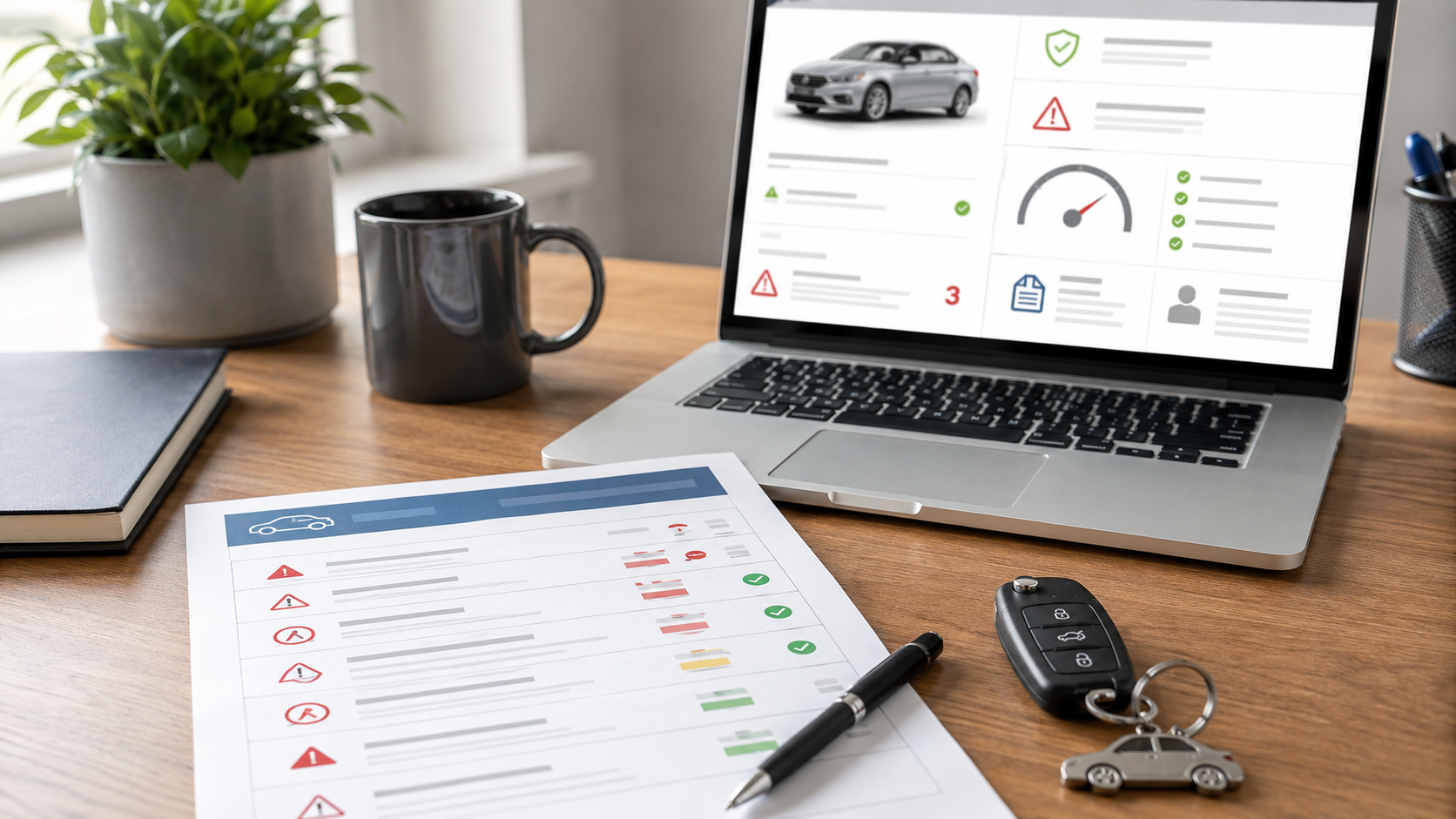
1. Salvage or rebuilt title records
One of the biggest red flags in a vehicle history report is a title brand such as salvage or rebuilt. These labels can indicate that the vehicle was previously declared a total loss or had serious damage before being repaired and returned to the road.
A salvage or rebuilt title does not automatically mean the car is unusable, but it does mean you should be much more careful. Insurance, financing, resale value and safety can all be affected.
If you see this type of record, ask for repair documentation and consider a professional inspection before moving forward.
2. Accident history that does not match the seller’s story
Accident records are not always deal-breakers, but they need context. A minor cosmetic incident is very different from a major collision, structural damage or total loss event.
The red flag is when the report shows accident history and the seller either did not mention it or describes it in a way that does not match the record.
Ask direct questions such as when the accident happened, what was damaged, who repaired it and whether there are receipts or inspection documents.
3. Odometer inconsistencies
Mileage matters because it affects value, maintenance expectations and buyer confidence. A vehicle history report may show recorded odometer readings over time.
If the mileage appears to go backward, jump strangely, or show gaps that do not make sense, treat it as a serious warning sign.
Odometer rollback can make a vehicle look less used than it really is. If the report raises questions, compare the mileage with service records, inspection documents and the vehicle’s condition.
4. Flood, fire or major damage indicators
Flood and fire damage can create long-term problems that are not always obvious during a quick test drive. Electrical issues, corrosion, smells, stains and hidden damage may appear later.
If the report shows flood, fire, total loss or major damage indicators, slow down. These records can affect the vehicle’s safety, reliability and resale value.
In this case, a pre-purchase inspection is especially important.
5. Lien or sale history concerns
Sale and lien records can help buyers understand whether there are ownership or financial records worth checking before buying.
A lien-related concern does not always mean the car cannot be sold, but you need to verify that the seller has the legal right to transfer ownership and that the title can be cleared properly.
Never rely only on verbal promises. Review title documents carefully and confirm the transaction process before paying.
6. Theft or theft recovery records
Some vehicle history reports may include theft-related records when available. A theft recovery record deserves extra attention because it may be connected to damage, missing parts, insurance claims or title branding.
If this appears in the report, ask for more information and compare the record with the vehicle’s title and current condition.
Practical tip: if a vehicle has any serious history record, do not judge it only by price. A cheaper car can become expensive if hidden issues appear after purchase.
7. Commercial, rental, taxi or fleet use
A vehicle previously used as a rental, taxi, police vehicle, government vehicle or fleet car may have experienced heavier use than a typical personal vehicle.
This does not automatically make it a bad car, but it can affect wear, maintenance expectations and resale value.
If the report suggests commercial or fleet use, inspect the interior, suspension, brakes, tires and maintenance records more carefully.
8. Unresolved recalls
Recall records are important because they may involve safety-related issues. A vehicle history report may help surface recall information, but it is also smart to verify recalls directly when possible.
If a recall appears unresolved, ask whether the repair has been completed and request documentation if available.
You can also check recall information through official recall lookup resources using the VIN.
9. Frequent ownership changes
Frequent ownership changes may be harmless, but they can also raise questions. A car that changed hands many times in a short period may have had problems that previous owners did not want to keep dealing with.
This is not proof of a bad vehicle, but it is a reason to ask better questions and review the inspection results carefully.
10. Gaps or missing records
Missing records are not always a red flag. Some vehicles simply have less reportable history available. However, big gaps can make it harder to understand how the car was used and maintained.
When records are limited, the inspection becomes even more important. Ask the seller for maintenance receipts, ownership documents and any available service history.

What to do if you find a red flag
Finding a red flag does not always mean you should walk away immediately. It means you should slow down and gather more information.
Here is a practical process:
- Ask the seller to explain the record.
- Request supporting documents or repair receipts.
- Compare the report with the title and registration.
- Inspect the vehicle in person.
- Get a pre-purchase inspection when possible.
- Use the red flag as a negotiation point if the issue is explainable.
- Walk away if the explanation feels vague, rushed or dishonest.
How to check for vehicle history report red flags
To check for red flags, start with the VIN. The VIN is usually found on the dashboard near the windshield, inside the driver-side door jamb, and on title, registration or insurance documents.
Once you have the VIN, you can run a vehicle history report and review the sections carefully instead of only scanning the summary.
If you want to compare one option, you can check a vehicle history report here.
You can also read our full VINCheckUp vehicle history report review for a complete overview of the service, available records and key limitations.
Vehicle history report red flags are only part of the decision
A vehicle history report can help you identify records worth reviewing, but it cannot guarantee the current condition of the car.
Some damage may never have been reported. Some repairs may not appear clearly. Some recent events may take time to show up. That is why the report should be used alongside a physical inspection and careful document review.
Important: a clean report is not a guarantee, and a red flag is not always an automatic rejection. Use the report to ask better questions before buying.
Final thoughts
Vehicle history report red flags can protect you from rushing into a used car purchase without enough information. Title issues, accident records, odometer inconsistencies, flood damage, liens, theft records and unusual ownership patterns all deserve attention.
The smartest approach is simple: run the report, inspect the vehicle, ask direct questions and walk away if the story does not make sense.
Used car buying always involves some risk, but a careful review process can help you make a more informed decision.
Reminder: this article is for informational purposes only. Always verify the VIN, review documents carefully and consider a professional inspection before buying a used vehicle.
Sources and verification
Use these official resources to verify title brands, total-loss and salvage context, recall status, VIN details and the limits of a history report.
- U.S. Department of Justice: Understanding an NMVTIS Vehicle History Report
- Federal Trade Commission: Used Cars
- NHTSA: Check for Recalls
- NHTSA: VIN Decoder
Sources last checked: August 7, 2026.