
Affiliate disclosure: This article may contain affiliate links. If you buy through our links, Only For U Deals may earn a commission at no extra cost to you. This content is for informational purposes only.
A vehicle history report can be one of the most useful tools when researching a used car. It helps buyers look beyond the seller’s description and check whether the vehicle has records tied to accidents, title problems, mileage inconsistencies or other red flags.
But there is one important thing many buyers overlook: a vehicle history report is helpful, but it is not perfect. It can reveal a lot, but it can also miss things depending on what was reported and when it was recorded.
In this guide, we explain what a vehicle history report can show, what it may not show, and how to use it more effectively before buying a used car.
What is a vehicle history report?
A vehicle history report is a record-based summary tied to a car’s VIN, or Vehicle Identification Number. It is designed to gather available information from various sources and present key details that may help buyers evaluate a used vehicle before making an offer.
In simple terms, it is one of the easiest ways to check whether the story a seller tells matches the history that has been recorded for the car.
If you are new to this process, you may also want to read our step-by-step guide: How to Check a Used Car’s History Before You Buy.
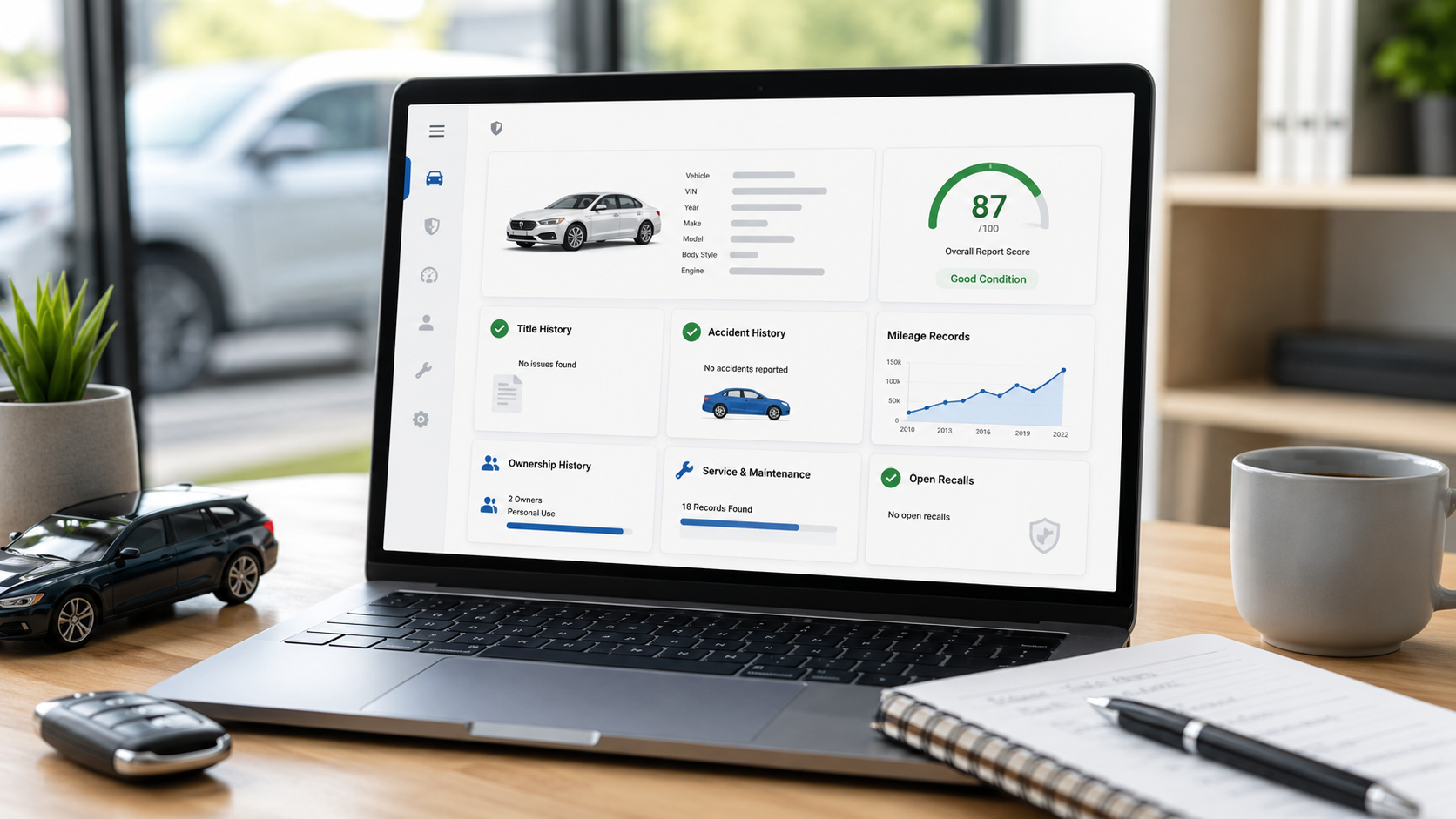
What a vehicle history report can tell you
A good vehicle history report can help you spot several important data points before you buy. While the exact information may vary, most buyers use a VIN report to look for patterns, inconsistencies and warning signs.
Title history
One of the main reasons buyers run a VIN check is to review title-related records. This may help reveal whether the vehicle has been associated with salvage branding, rebuilt status or other title concerns.
Accident records
A vehicle history report may include reported accident information. This can help you understand whether the car has been involved in a collision and whether the seller’s description matches the vehicle’s known record.
Odometer readings
Mileage consistency matters. A report may show recorded odometer readings over time, which can help identify suspicious gaps or possible rollback concerns.
Ownership history
Some reports can show details related to the number of owners or registration history. This can give you more context about how the vehicle may have been used.
Recall information
A history report may also help surface recall-related information. Even if the vehicle seems fine visually, it is worth checking whether there are unresolved recalls tied to the VIN.
Service or record-based events
Depending on the data available, some reports may include entries tied to registration events, inspections, emissions, service-type records or other documented activity.
Practical tip: a vehicle history report is most useful when you compare it with the seller’s claims, the current condition of the car and the title documents.
What a vehicle history report cannot tell you
This is where many buyers make mistakes. A clean-looking report does not automatically mean the vehicle is problem-free.
A vehicle history report can only show information that was reported and made available through the sources feeding the report. If something was never recorded, delayed, or handled informally, the report may not reflect it.
Current mechanical condition
A history report does not replace a real inspection. It cannot tell you whether the engine, transmission, suspension, brakes or electronics are currently in good condition.
Unreported damage
If damage was never officially reported, it may not appear in the report. This is one reason why a physical inspection still matters, even when the VIN report looks clean.
Repair quality
A report may indicate that an accident happened, but it usually will not tell you whether repairs were done properly or cheaply.
Cosmetic and hidden issues
Paint mismatch, flood residue, worn components, smells, electrical quirks and poor maintenance habits may not show clearly in a history report.
Very recent events
Some records take time to appear. If something happened very recently, there may be a delay before it becomes visible in the report.

Why you should combine a history report with an inspection
The smartest way to evaluate a used car is to combine a vehicle history report with a proper inspection. The report helps you research the vehicle’s recorded past, while the inspection helps you evaluate its present condition.
If you are serious about buying, try to do both:
- Run a VIN check before making a decision.
- Compare the report with the seller’s story.
- Inspect the car in person.
- If possible, get a pre-purchase inspection from a trusted mechanic.
This combination gives you a much better chance of spotting problems before they become expensive surprises.
What should you look for in a report?
When reviewing a vehicle history report, do not just scan it quickly. Slow down and look for anything that deserves a second look.
- Salvage or rebuilt title references
- Accident entries
- Odometer inconsistencies
- Frequent ownership changes
- Unresolved recalls
- Gaps that do not seem to match the seller’s explanation
If anything seems unclear, ask direct questions. A good seller should be able to explain the vehicle’s background and provide supporting paperwork when needed.
When should you run a VIN check?
Ideally, before you commit too far.
A VIN check makes the most sense when you are seriously evaluating a used car and want to screen out obvious problems before spending more time, money or energy on the deal.
If a seller refuses to share the VIN before a serious conversation, that is already something worth noting.
How to check a vehicle history report
If you want to look up a VIN report, use a service designed for that purpose and make sure you enter the VIN correctly. Then read the full report instead of relying only on a headline summary.
If you want to compare one option, you can check a vehicle history report here.
You can also read our dedicated page: VINCheckUp review.
Important: a vehicle history report is a research tool, not a guarantee. Use it to make a better decision, not as the only step in your buying process.
Final thoughts
A vehicle history report can tell you a lot about a used car, but it cannot tell you everything. It is valuable because it helps uncover records tied to title history, accidents, mileage and other warning signs.
At the same time, it has limits. It may not reflect unreported damage, current mechanical issues or the quality of past repairs.
The best approach is simple: use the report, inspect the car and ask better questions before buying.
Reminder: this article is for informational purposes only. Always verify the VIN, review documents carefully and consider a professional inspection before buying a used vehicle.
Sources and verification
These official resources help verify what record-based vehicle history information can establish, what may be missing and why an independent inspection still matters.
- U.S. Department of Justice: Understanding an NMVTIS Vehicle History Report
- Federal Trade Commission: Used Cars
- NHTSA: Check for Recalls
- NHTSA: VIN Decoder
Sources last checked: August 7, 2026.