Affiliate disclosure: This article may contain affiliate links. If you use our links, Only For U Deals may earn a commission at no extra cost to you.
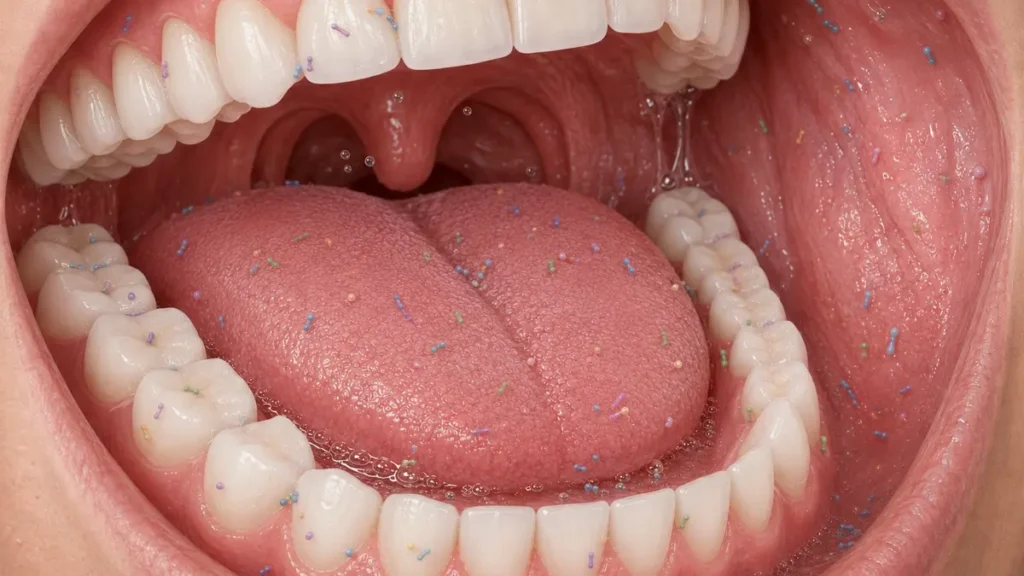
The oral microbiome is the community of bacteria, fungi, viruses, archaea, and other microorganisms that live in the mouth. These organisms occupy different habitats—including the tongue, teeth, gums, saliva, and oral tissues—and interact with one another, the immune system, diet, and daily oral care.
Having microbes in the mouth is normal. The goal is not to eliminate them all. Oral health depends on a changing ecological balance in which helpful and harmless organisms can coexist without disease-associated communities taking over.
What is the oral microbiome?
The terms oral microbiome and oral microbiota are often used interchangeably in consumer discussions. More precisely, microbiota refers to the microorganisms present, while microbiome can also include their genetic material, functions, interactions, and surrounding environment.
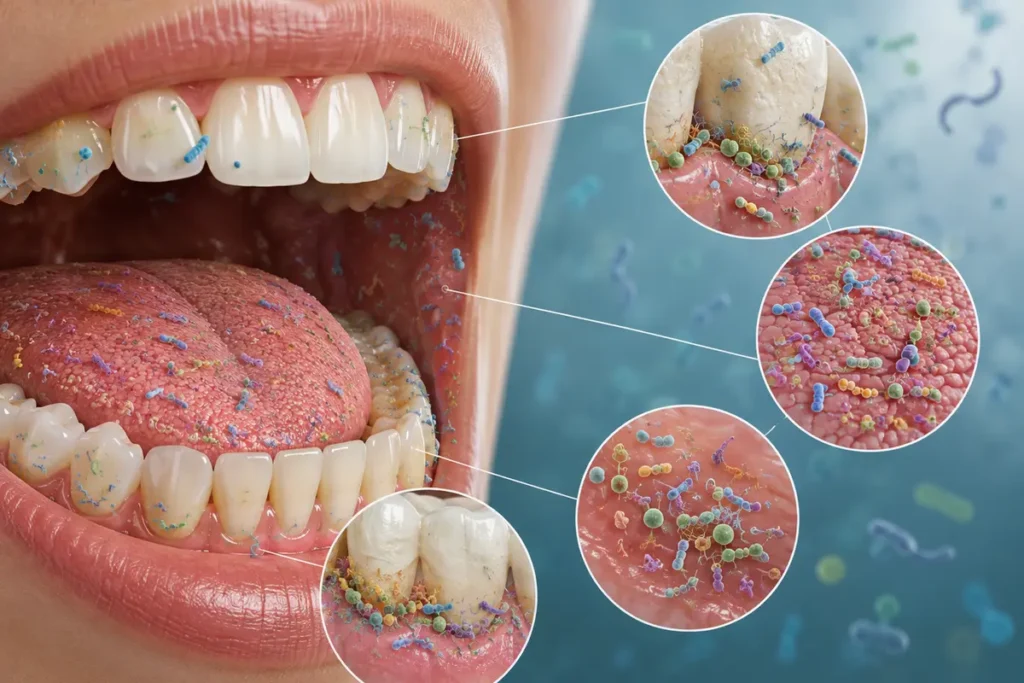
The mouth is not one uniform habitat. Teeth provide hard, non-shedding surfaces where biofilms can remain attached. The tongue has textured structures and lower-oxygen areas. Saliva moves organisms and nutrients between locations, while the gums create another distinct environment around the tooth surface.
A major scientific review in Nature Reviews Microbiology describes the oral microbiota as a highly diverse and spatially organized ecosystem. This means that a microorganism found on the tongue may have a different role or abundance from one found in dental plaque or below the gumline.
Are oral bacteria good or bad?
The simple division between “good bacteria” and “bad bacteria” can be misleading. Many oral microorganisms are common residents that participate in a complex community. Whether a community supports health or contributes to disease depends on location, abundance, microbial interactions, diet, saliva, immune response, and other environmental conditions.
Health-associated communities can help occupy space, interact with the immune system, and limit opportunities for disease-associated organisms. Problems may develop when environmental pressures repeatedly favor acid-producing, inflammation-associated, or odor-producing communities.
What does “oral microbiome balance” mean?
There is no single perfect oral microbiome shared by every healthy person. Researchers find substantial variation between people and between different areas of the same mouth.
In practical terms, balance refers to an ecosystem that remains compatible with healthy teeth, gums, saliva, and oral tissues. Dysbiosis describes a shift in the community and its activity that is associated with disease. It is not simply the presence of one named organism.
| Oral habitat | Why it is different | What can accumulate there |
|---|---|---|
| Teeth | Hard surface that does not naturally shed | Dental plaque and structured biofilm |
| Tongue | Textured surface with many small niches | Coating, food debris and odor-associated communities |
| Gumline | Interface between teeth, tissue and gingival fluid | Plaque associated with gingival inflammation |
| Saliva | Continuously circulates through the mouth | Microorganisms and molecules shed from multiple sites |
| Cheeks and oral tissues | Soft surfaces that regularly shed cells | Communities adapted to mucosal surfaces |
How the oral microbiome relates to cavities and gum disease
Dental cavities and periodontal disease are not caused by the oral microbiome merely existing. They involve ecological changes, host factors, behavior, and time.
Cavities
Frequently exposing dental plaque to fermentable carbohydrates—especially sugars—can favor organisms and metabolic activity that produce acids. Repeated acidic conditions can shift the biofilm and contribute to mineral loss from tooth enamel.
This is why the frequency of sugar exposure, fluoride use, saliva, brushing, and professional prevention matter. A supplement cannot replace those established protections.
Gum disease
Plaque that remains around the gumline can contribute to gingival inflammation. In susceptible people, a more complex interaction between microbial communities and the immune response can contribute to periodontitis and damage to the tissues supporting the teeth.
Bleeding gums, persistent swelling, recession, loose teeth, or ongoing bad breath deserve dental evaluation. Trying to “rebalance” the microbiome with a consumer product should not delay diagnosis or treatment.
What can influence the oral microbiome?
The oral ecosystem changes throughout life. Factors that can influence its composition or activity include:
- diet and the frequency of sugar or acidic drink exposure;
- brushing, interdental cleaning, fluoride and professional care;
- saliva flow and dry mouth;
- smoking, vaping and other tobacco exposure;
- medications and medical conditions;
- antibiotic or antimicrobial exposure;
- dentures, orthodontic appliances and restorations;
- age, hormones, immune function and individual biology.
Because these factors interact, a microbiome test or product label cannot provide a complete picture of someone’s oral health by itself.
How to support a healthy oral environment
The most reliable steps are familiar because they address plaque, diet, saliva, and disease risk rather than promising to engineer a perfect microbial community.
- Brush consistently with fluoride toothpaste. Follow guidance appropriate for your age and dental needs.
- Clean between the teeth. Floss or use another interdental method recommended by your dental professional.
- Limit frequent sugar exposure. Frequency matters because repeated intake repeatedly feeds acid-producing plaque activity.
- Support saliva. Stay hydrated and ask about persistent dry mouth, especially when medication may contribute.
- Avoid tobacco. Smoking and other tobacco exposure affect oral tissues and microbial ecology while increasing disease risk.
- Keep regular dental visits. Prevention and treatment should be personalized to your actual teeth, gums and risk factors.
Do mouthwash and antibiotics harm the oral microbiome?
Antimicrobial products can change oral microbial communities, but “changes the microbiome” does not automatically mean that a recommended treatment is harmful. Therapeutic mouthrinses and antibiotics have specific indications, benefits, risks, doses, and durations.
Do not stop a prescribed medication or dental treatment because of a general microbiome claim online. Ask the prescribing professional why it is being used, how long to use it, and whether alternatives are appropriate.
Where do oral probiotics fit?
Oral probiotics are being studied as possible additions to established care. The idea is that selected strains may temporarily interact with oral biofilms, compete with other organisms, or influence the local environment.
Evidence is not interchangeable between products. A result involving one identified strain, dose, delivery format, population, and outcome cannot automatically be applied to every probiotic supplement.
Our evidence-based guide to oral probiotics for teeth and gums explains what the research can and cannot establish. If you are comparing a branded formula, read the ProDentim ingredients analysis and our complete ProDentim review rather than assuming that general microbiome research proves a finished product works.
What about links between the mouth and the rest of the body?
Researchers have found associations between oral microbial patterns, periodontal inflammation, and several systemic conditions. The mouth also interacts with the immune system and other parts of the body.
However, association does not prove that a particular oral microbe causes a distant disease or that changing the oral microbiome with a supplement will prevent or treat that disease. Much of the research remains observational or mechanistic. Clinical decisions should rely on professional care and evidence for the specific condition.
Frequently asked questions
Can you test your oral microbiome?
Commercial and research tests can analyze microorganisms in saliva or plaque, but interpretation is still developing. Results can vary by sample location, collection method, recent behavior, and the reference database. A test does not replace a dental examination or established diagnostic methods.
Can you permanently change the oral microbiome?
The oral microbiome is dynamic and responds to ongoing conditions. Short-term changes do not necessarily mean permanent colonization or lasting clinical benefit. Diet, saliva, hygiene, treatment, and individual biology continue to shape the ecosystem.
Does killing all oral bacteria improve health?
No. The mouth normally contains diverse microbial communities, many of which are compatible with health. Oral care aims to control harmful plaque activity and disease risk, not sterilize the mouth.
Final takeaway
The oral microbiome is a complex ecosystem, not a simple list of good and bad bacteria. Supporting oral health still begins with fluoride, plaque control, sensible sugar exposure, healthy saliva, tobacco avoidance, professional care, and treatment when needed. Microbiome products may be interesting additions, but their claims must be evaluated at the strain, product, and outcome level.